Understanding Crystal Meanings: A Guide to Choosing the Perfect Crystal Bracelet
Crystal bracelets are more than decorative accessories: they are personal symbols that many people choose for intention, style, and emotional resonance. In the language of crystals, each stone is believed to carry its own energetic qualities, making a bracelet both a wearable ornament and a meaningful reminder of the goals, moods, or values you want to support in daily life.
Whether you are drawn to crystals for their cultural traditions, their aesthetic beauty, or their calming presence, choosing the right bracelet can feel deeply personal. This guide will help you understand common crystal meanings, compare different styles, and make a choice that fits both your intention and your taste.
I. Common Types and Meanings
- Amethyst — The Calm Keeper
- Meaning: Often associated with peace, clarity, intuition, and stress relief.
- Features: Usually shown in violet to deep purple tones; higher-quality stones often have strong color saturation, good translucency, and consistent polish.
- Rose Quartz — The Heart Stone
- Meaning: Commonly linked to love, compassion, emotional healing, and kindness.
- Features: Known for soft pink hues ranging from pale blush to milky rose; quality is often judged by color softness, smooth surface, and even bead shapes.
- Clear Quartz — The Amplifier
- Meaning: Considered a stone of clarity, focus, and energy amplification.
- Features: Typically transparent or near-transparent with a glass-like shine; fewer inclusions and strong clarity are often viewed as indicators of higher quality.
- Citrine — The Success Spark
- Meaning: Frequently connected to abundance, optimism, confidence, and motivation.
- Features: Ranges from pale yellow to rich golden amber; good pieces often have lively color, minimal cloudiness, and a bright, sunny appearance.
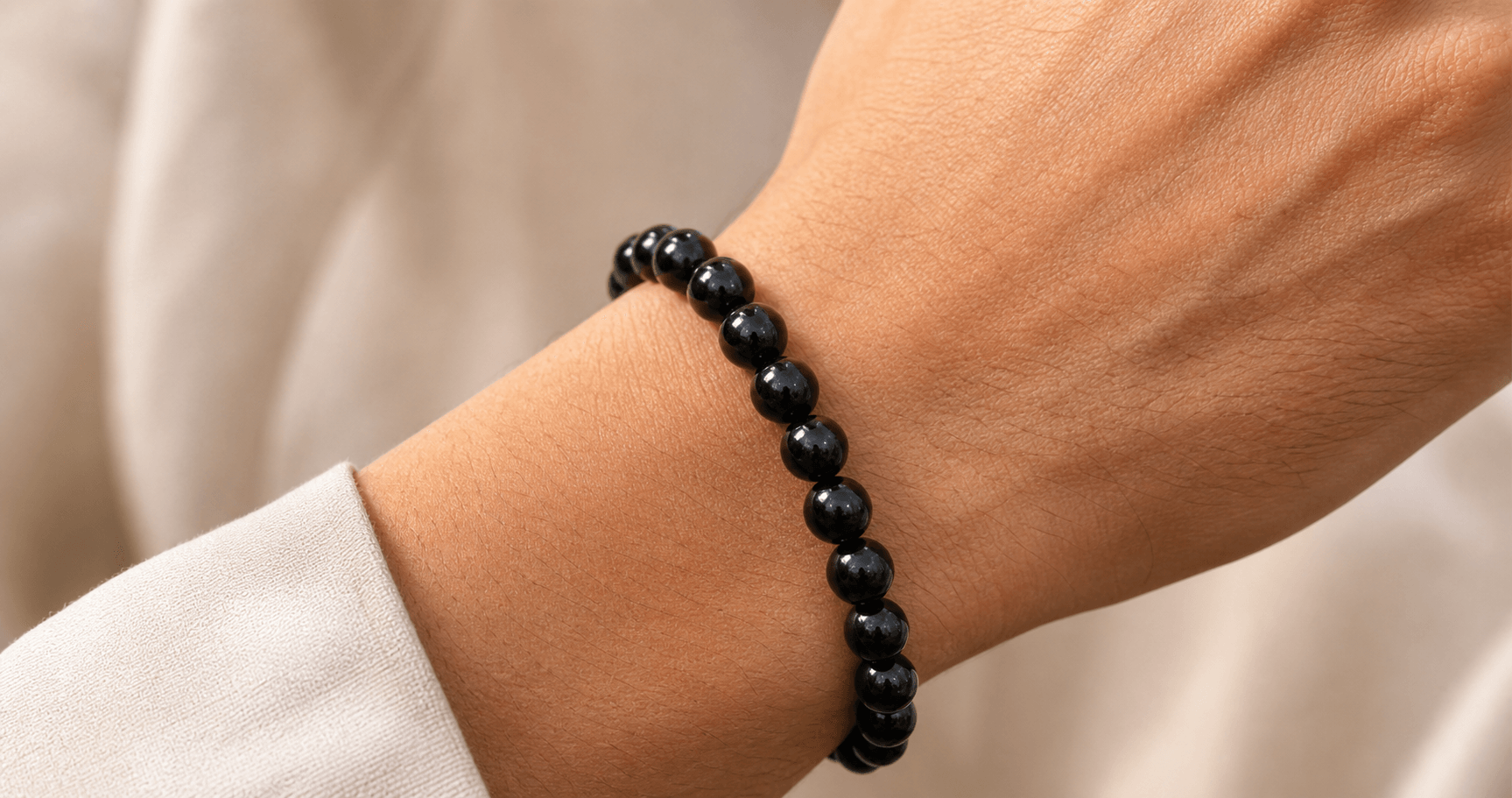
- Black Tourmaline — The Shield
- Meaning: Often chosen for grounding, protection, and absorbing negative energy.
- Features: Usually deep black with a dense look; quality may be reflected in a smooth finish, strong luster, and a uniform bead cut.
- Lapis Lazuli — The Wisdom Stone
- Meaning: Traditionally associated with insight, truth, communication, and inner wisdom.
- Features: Recognized by its royal blue base with gold-colored pyrite flecks; deeper blue and balanced flecking are often prized.
- Green Aventurine — The Lucky Charm
- Meaning: Commonly linked to opportunity, luck, growth, and a sense of renewal.
- Features: Usually a soft to medium green with a subtle shimmer; better pieces tend to have even color, a gentle sparkle, and well-finished beads.
II. How to Professionally Choose the Right Crystal Bracelet
1. Define Your Purpose
- Identify the feeling or intention you want to support, such as calm, confidence, protection, love, or focus.
- Choose a stone whose meaning aligns with that intention rather than selecting only by color.
- If you are drawn to several crystals, consider whether you want a single-focus bracelet or a blended combination.
2. Evaluate the Core Criteria
- Look at the stone’s authenticity, finish, and whether the seller gives clear material details.
- Check for consistent bead quality, secure stringing, and comfortable spacing between beads.
- Consider how the bracelet fits your wardrobe, lifestyle, and the occasions where you plan to wear it.
3. Select the Right Size and Style
- Measure your wrist so the bracelet sits comfortably without feeling too tight or overly loose.
- Decide between minimalist single-stone designs, mixed-stone strands, or accent bracelets with metal details.
- Choose bead size based on visual impact and comfort: smaller beads feel subtle, while larger beads create a stronger statement.
4. Assess Craftsmanship and Finish
- Inspect the polish, bead symmetry, and overall consistency of the bracelet’s design.
- Look for strong elastic or durable cord, especially if you plan to wear the bracelet often.
- Pay attention to the overall harmony of the piece: good craftsmanship should feel balanced, wearable, and visually refined.
III. Pitfalls to Avoid and Maintenance Tips
- Avoid buying only for appearance: a beautiful bracelet is more meaningful when its symbolism, comfort, and quality all align.
- Store with care: keep your bracelet in a soft pouch or separate compartment to reduce scratches, tangling, and dulling.
- Wear mindfully: remove it during heavy cleaning, sports, or water exposure unless the material is known to tolerate it well.
The best crystal bracelet is the one that feels meaningful, comfortable, and visually true to you. As you explore different stones and styles, trust both your knowledge and your intuition: the process should be as enjoyable as the piece itself. When you find the bracelet that matches your intention and aesthetic, it becomes more than jewelry—it becomes a daily reminder of what you value most.